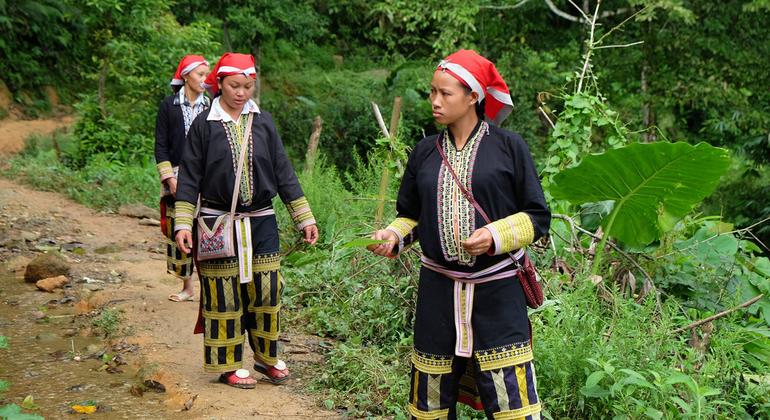
Exploring evidence-based uses of traditional medicine, like ginger to treat nausea, is one of the topics at the second World Health Organization (WHO) summit dedicated to traditional, complementary and integrative medicine (TCIM), taking place in India this week.
While most WHO member States report that 40 to 90 per cent of their populations use traditional medicine, a meagre one per cent of global health funding supports research in this field. Additionally, a WHO survey showed regional imbalances in the per cent of countries that have a national policy on TCIM.
Why has such little funding been allocated to traditional medicine? And is traditional medicine a treatment, a lifestyle or something else?
To find out, UN News spoke to Rabinarayan Acharya, Director General of India’s Central Council for Research in Ayurvedic Sciences (CCRAS) which collaborates with WHO to advance research in the field.
This interview has been edited for length and clarity.
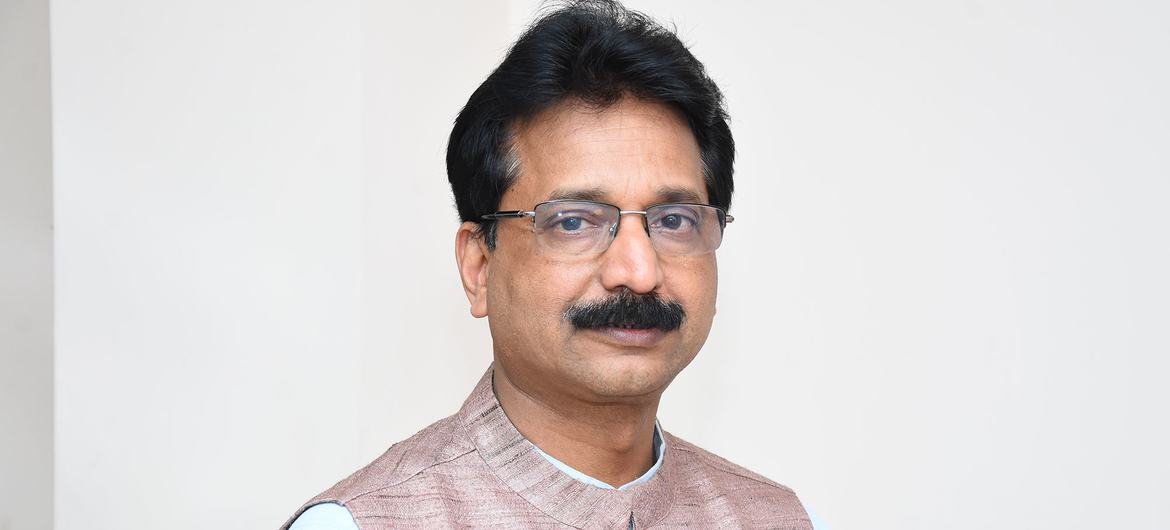
Rabinarayan Acharya is the Director General of India’s Central Council for Research in Ayurvedic Sciences (CCRAS).
UN News: How did you get into the field of traditional medicine?
Rabinarayan Acharya: My entry into traditional medicine was shaped early at home. My father was formally trained both in Ayurveda and Sanskrit at a reputed Sanskrit institution in Puri, Odisha, and I grew up exposed to classical texts, philosophy and scholarly traditions. Odisha’s strong living heritage of Ayurveda instilled in me a deep respect for Ayurveda as a knowledge system, not just a treatment modality. This foundation, combined with my science background and honours in Botany naturally led me to pursue Ayurveda as a career focused on research, evidence generation and teaching.
UN News: Is Ayurveda a lifestyle or a treatment?
Mr. Acharya: Ayurveda is both a way of life and a system of medicine, but its scope extends far beyond either in isolation. At its core, Ayurveda emphasises healthy living through appropriate lifestyle practices (Vihara), dietetics (Ahara) and ethical conduct (Sadvritta). These principles are designed to maintain homeostasis, prevent disease, and promote long-term well-being rather than merely address illness after it occurs. When illness does occur, Ayurveda offers well-structured therapeutic measures aimed not only at symptom relief but at restoring systemic homeostasis.
This holistic orientation aligns closely with conventional public health priorities, such as disease prevention, healthy ageing and management of chronic lifestyle-related disorders. The principles and practice of Ayurveda is especially relevant in the context of the global shift toward non-communicable diseases, which are largely driven by modifiable risk factors such as unhealthy diets, physical inactivity, stress and environmental exposures.
UN News: WHO’s Global traditional medicine 2025-2034 strategy aims to strengthen the evidence base for traditional medicine, among other goals. What role do national institutions play in advancing these goals?
Mr. Acharya: At CCRAS, our mandate directly addresses the need identified by WHO that while the use of traditional medicine is widespread, robust evidence on safety, effectiveness and appropriate use must be systematically generated.
We do this by designing and conducting methodologically rigorous clinical studies, observational research, and public health evaluations rooted in classical Ayurvedic principles, while adhering to contemporary scientific and ethical standards. These research initiatives focus on drug development, clinical research, pharmacology, medicinal plant research, epidemiology, and health systems research, thereby enabling evidence generation across the entire research continuum.
UN News: Currently, less than one per cent of global health research funding is allocated to traditional medicine. Why do you think that is and what will it take to change it?
Mr. Acharya: The limited share of global health research funding for traditional medicine is largely due to structural and methodological factors, not a lack of relevance or demand. Systems such as Ayurveda are complex, individualised and delivered as whole-system interventions, which do not always fit neatly into conventional biomedical research frameworks that dominate global funding priorities.
Changing this will require a strategic shift toward evidence-informed integration, as outlined in the WHO Global Traditional Medicine Strategy 2025–2034. This means sustained investment in high-quality, fit-for-purpose research that clearly demonstrates safety, effectiveness and public health value — from health promotion and prevention to treatment, rehabilitation, and palliative care. Equally critical is embedding validated traditional medicine interventions into national health policies.
UN News: How hopeful are you that more countries will incorporate traditional medicine in their health systems?
Mr. Acharya: I am cautiously optimistic, and the global momentum is certainly encouraging. This is particularly relevant at a time when health systems are under pressure from rising noncommunicable diseases, ageing populations and workforce and resource constraints.
Importantly, integration does not imply replacement of conventional care, but rather a complementary approach where safe and effective traditional medicine practices are aligned with national health priorities and public health goals.
UN News: Can you give us an example of evidence-based traditional medicine used to treat body ailments or mental health?
Mr. Acharya: Withania somnifera (Ashwagandha), traditionally used as an adaptogen in Ayurveda, has been studied as a complementary treatment for mental health. Evidence suggests it may help reduce symptoms of depression and anxiety, while being generally safe and well tolerated, highlighting its potential as a therapy in mental disorders.