Home  Features
With most carriers suspending operations, Aziz, a former Middle East Airlines’ advisor, discusses how the Beirut airport keeps operating despite Israel’s strikes on Lebanon.
Since the start of the US-Israeli war on Iran in late February, air traffic across the Middle East has been severely disrupted. Large portions of regional airspace are either closed or avoided, forcing airlines to reroute flights and cancel services.
In Lebanon, the situation is even more extreme: Israel strikes Beirut and its southern suburbs almost daily, just minutes from the country’s only international airport. With most carriers suspending operations, Middle East Airlines (MEA) remains the only one flying, maintaining a fragile lifeline with the rest of the world.
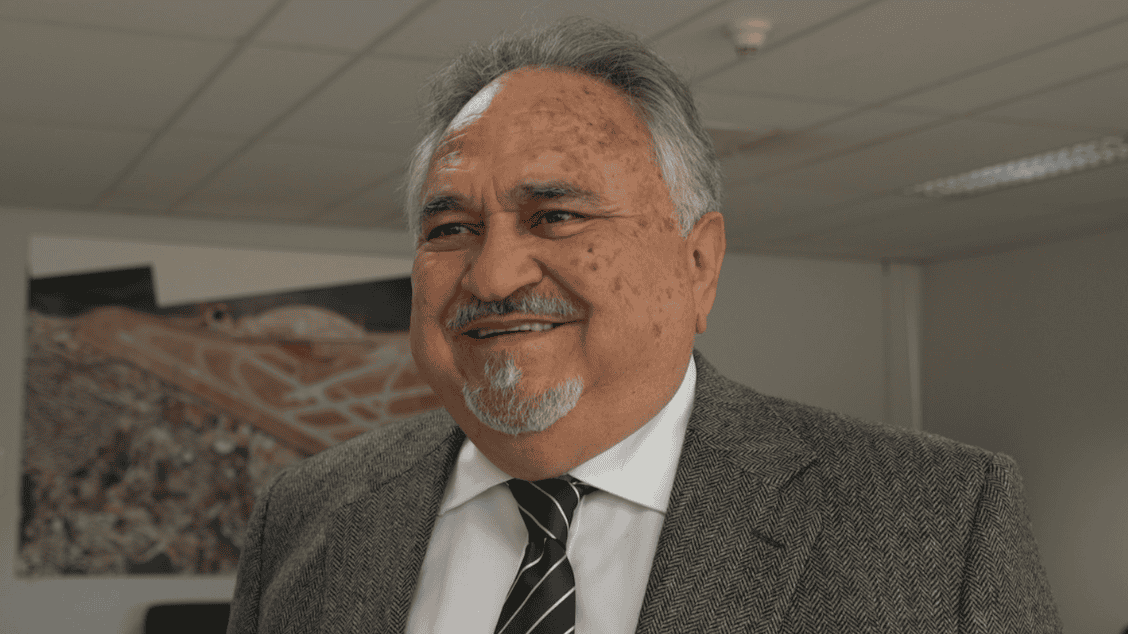
Global Finance sits down with Captain Mohammed Aziz, head of Lebanon’s Civil Aviation Authority and former senior advisor to MEA’s CEO, to discuss how the Beirut airport continues to operate under fire and what this means for the airline’s business.
Global Finance: How is the airport operating these days?
Aziz: Considering what’s going on around us, the airport is operating in a very nice way. For example, on April 1st, there was a hit near the airport road. The security forces closed the road for half an hour, the time for the bombing to happen and for it to be cleaned. They then resumed operations. But the airport didn’t stop at all during this period. We are ensuring that the airport remains open safely and securely despite the situation.
GF: How do you know when a strike is going to happen and when planes can go in or out?
Aziz: First, most of the time, [Israeli authorities] announce where they want to bomb, especially if it’s around Beirut. Second, we can see on the radar if there are planes coming in for bombardment. They also know when a civilian aircraft is coming in, and they try to avoid it. Only once or twice did they come during a civilian operation. We had to hold the aircraft in the air until they finished their job before landing.
GF: Who are the airlines flying in and out?
Aziz: MEA is flying on all its routes, except to destinations where the airports are closed, like Kuwait, Doha or Abu Dhabi. They are losing about 40% of their traffic because many Gulf airports are closed. Gulf carriers are not coming to Beirut anymore because either their airport is not operating, or, when it is, they have other priorities. European carriers stopped serving the whole region from day one.
GF: What are the MEA’s operations?
Aziz: MEA now has 22 planes; five or six are parked continuously abroad, so they don’t get exposed if anything happens. That means they are practically operating with 16 aircraft. But even these 16 planes are not at full capacity. For example, some airports that used to take Airbus A330s now receive A321s. They have to maintain a balance in order to minimize their losses and insurance exposure.
GF: Why is the MEA the only airline flying?
Aziz: Well, because it’s a Lebanese carrier. For MEA to stay alive, they have to fly. They also consider it a duty to maintain the link between Lebanon and the outside world. This has always been MEA policy. They only stop when the risk assessment tells them not to fly. This occurred a lot during the civil war (1975-1990) and more recently during the 2006 war. But for the time being, MEA is still flying.
GF: How does flying from and to Beirut still make sense business-wise for the MEA?
Aziz: To be able to fly in such a situation, you need a daily risk assessment conducted at the highest level, with the highest contacts. The head of civil aviation, the chairman of MEA and the head of the security forces have to be in direct contact with the government 24/7. The government is in contact with embassies and foreign ministries. So if anything changes, we can know immediately and take the right decision. Every day we have a coordination meeting. If anything changes, we know about it, but this is time-consuming. Now, if Lebanon is 100% of your operations, you do it because the only alternative is to stop. But for foreign airlines, Beirut is just one of thousands of flights, so they say, “OK, forget about it, when the situation gets better, we will return.”
GF: How does insurance cost evolve in a situation like this?
Aziz: Insurers look at many aspects: the risk management done by the company, by the authorities, their own information, and they adjust their policy accordingly. Sometimes they give higher premiums, sometimes they lower the ceiling, sometimes they say you can continue as you are. And it changes constantly. Today might be one thing, tomorrow another, so we have to keep in touch with them.
GF: During a war situation, are there other extra costs?
Aziz: Sure. We have to pay employees extra to encourage them to come in and thank them for being here under the circumstances. If they feel they don’t want to come, they still get their salary. We also have special sleeping facilities for the staff to stay close to the airport. Then there are fuel costs. The ton used to be $700; it’s now $1,500. That’s over a 100% increase. And finally, some routes are now longer. For instance, Beirut to Dubai previously took three hours. Now, it’s about five because planes have to go from Dubai to Oman to Saudi Arabia to Egypt to Cyprus to Beirut instead of coming straight. In addition to the extra fuel costs, the longer flight time means more aircraft maintenance and more staff hours. It’s these incremental cost that keep on adding up.
GF: How can a company like MEA compensate for this extra cost?
Aziz: They cannot compensate 100%, but they can offset some of the cost with yield management. If you have many empty seats, you lower the price of the ticket; when the plane gets full, you raise it. It doesn’t recover all the extra costs, but the only alternative would be to stop flying. Even if they suffer some temporary losses, the MEA considers that people will appreciate that they kept flying, and when things return to normal, they will remain loyal customers. We are confident that the future will be bright. This is why we are working day and night to ensure that the airport remains open and that people’s confidence in the airline and the country remains the same, so that whenever things settle down, they know they have a good airport that never lets them down.
GF: Do you see opportunities in this time?
Aziz: Yes, we are using the current situation as an opportunity to accelerate the improvements to the departure and arrival areas we had started last year. Normally, it should take a year. However, the density of travelers is now 20-25% of what it normally is. I think we can finish it in two to three months.